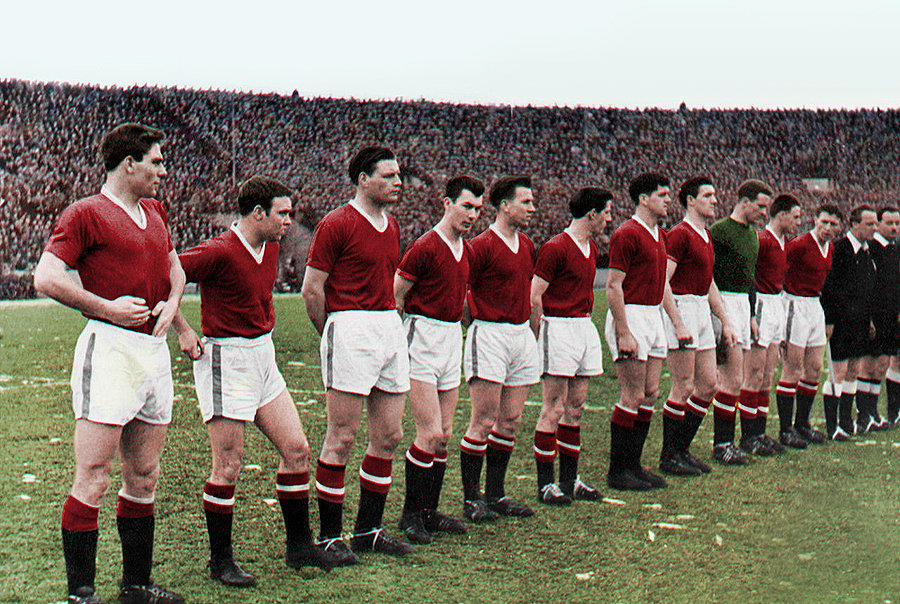
Busby Babes – The Legacy of Munich.

Manchester United are known for their never-say-die spirit. Fighting against the very end no matter how stacked the odds are against them. We’ve seen countless games where they’ve been outplayed, outscored or outshone, but they’ve managed to fight back and snatch victory from the jaws of defeat at the very death. Off the top of my head, I’d cite the famous 1999 Champions League final win after two goals in injury time to steal the title away from Bayern Munich. Or *that* Michael Owen goal in the dying seconds of the Manchester Derby in 2009 at Old Trafford. But I’m not about to give you a history lesson on all the famous comebacks Manchester United have made in their 140 year history (Trust me, that’ll take a looooooooong time to list out).

England’s most successful club have had countless moments and events in history that will go down in football lore as some of the most memorable in history. But none will be more important than the tragedy that occurred on February 6th, 1958. British European Airways Flight 609 crashed on it’s third attempt to take off from a slush-covered runway at Munich-Riem Airport. 44 passengers, including the Manchester United squad, manager Matt Busby, supporters and journalists. 20 of the 44 died at the scene of the crash. 3 more were rushed to Rechts der Isar Hospital in Munich, where a further two died from injuries sustained. Shock waves spread throughout Britain and the football world. The club would never be the same again. There was no way the club could survive and get past such a horrible tragedy. But, as ever, Manchester United would make probably the greatest comeback in their history. But I’m getting ahead of myself. This article isn’t about the tragedy itself, but about the club and it’s squad of potential European heavyweights prior to the crash.
Busby Babes
The Busby Babes. 

‘The Busby Babes’, a term coined by Manchester Evening News journalist Tom Jackson, was given to a group of footballers recruited and trained by Manchester United through their academy by chief scout Joe Armstrong and assistant manager Jimmy Murphy. They were promoted to the first team by the late, great Sir Matt Busby. At that point of time, managing a club like Manchester United and taking them to such great heights was the equivalent of scaling Mount Everest. The club was relegated twice in the 1930s and were close to bankruptcy. To make matters worse, their home ground, Old Trafford, was bombed by the Luftwaffe, leaving them to play their home games in Maine Road, home to local rivals Manchester City.

As soon as Matt Busby took charge in 1945, he saw a vision. He saw a future. He saw beauty in that old bombed stadium. He saw an opportunity to create a phoenix out of the ashes of that stadium. He would change the philosophy and ideology of the club for decades to come. A philosophy United still follow to this day (minus Mourinho’s bus parking). He wanted newer, fresher legs, players he could mould and develop in his own image. He knew that the youth had the key to success, not just for United, but for the future of the game. He won his first title within two years of his reign. But his team was ageing. It was time for the youth to take charge.

Soon, players like Roger Byrne, Jackie Blanchflower, Mark Jones, Eddie Colman and Duncan Edwards became first team regulars. Soon, the titles started to flow, as United ran away with the League title in 1956. The average age of the squad players was 22. Babes indeed. Busby started to set his sights on greater things. The newly formed European Cup was one of those things. United soon started to make their mark in Europe. Their biggest win came in the preliminary round of the 1956-’57 edition, with a 10-0 demolition of Anderlecht, a result which still remains United’s biggest win in a competitive match. Wins against Borussia Dortmund and Athletic Bilbao took them to the semi-finals, where they lost to the legendary Real Madrid side 5-3 on aggregate, a side consisting of all time greats like Alfredo di Stefano, Francisco Gento, Raymond Kopa and the like.

United were still marching on, with young players being promoted from the youth team. One player in particular was a young Englishman named Bobby Charlton. United retained their league title, making significant additions to the team, like goalkeeper Harry Gregg. Matt Busby and United soon focused on winning a third consecutive League title, and planning another assault on Europe. The season went by smoothly as expected, both domestically and in Europe. The first match in February 1958 saw United beat Arsenal in a 5-4 thriller, which left them in high spirits for the European Cup quarter-final second leg trip, where they would meet Red Star Belgrade………

Sadly, they never got to play.

Of the 23 that perished, Geoff Bent, Roger Byrne, Eddie Colman, Mark Jones, David Pegg, Billy Whelan and Tommy Taylor from the first team perished. Club secretary Walter Crickmer, trainer Tom Curry, and chief coach Bert Whalley from the staff also perished along with supporters and journalists. Duncan Edwards was found alive, and was rushed to the hospital, where he died 15 days later from injuries sustained. Duncan Edwards is remembered among United fans in particular. Had he survived, he would probably have been the one to lift England’s 1966 World Cup instead of Bobby Moore. Had he played on, we would have spoken about him in the same breath as Pele, Garrincha, di Stefano, Best and Cruyff. But alas, it was not to be.
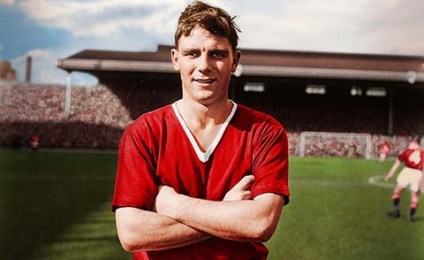
Duncan Edwards
Only United fans know of the awe-inspiring talent Duncan Edwards possessed. 

“United can’t possibly bounce back after this.” This was the thought that went through everyone’s head. Matt Busby was forced to stay in hospital for a further few months, while Jimmy Murphy, his assistant stood in as manager, having not traveled with the squad. A team largely composed of youth and reserve team players beat Sheffield Wednesday 3-0 in the first match after the disaster. It was a tragic time for the club. But Matt Busby had no plans of giving in. After resuming managerial duties in the 1958-’59 season, he set out to create a new generation of Babes. Ten years after that tragic crash, Matt Busby’s Manchester United, spearheaded by crash survivor Bobby Charlton, along with George Best and Denis Law (The Holy Trinity), beat Benfica in the finals of the European Cup, and took them to the pinnacle of European football. Bobby Charlton and Bill Foulkes were the only two crash survivors to line up in that game.

Bobby Charlton went on to form one of the best attacking trios of all time, with George Best and Denis Law. He won the 1966 World Cup with England, and the Ballon D’Or in the same year. He went on to become Manchester United’s and England’s all-time leading goalscorer before leaving in 1975. His goal scoring records stood for almost 4 decades, before he was surpassed by Wayne Rooney, for both club and country. Matt Busby managed United till 1969, before returning for a short stint from 1970 to 1971, winning 13 trophies overall, and leaving as one of the greatest managers of all time.

The events that occurred in Munich still remain deeply rooted in every Manchester United fan’s heart. Manchester United would not be the club it is today if not for what happened. In the midst of all the mourning and bereavement, the club and it’s supporters found a new sense of identity. A never-say-die attitude. To keep fighting till the very end. Those values still resonate within Old Trafford. 60 years on, the tragedy of Munich is still fresh in the memory of football fans. It also serves as a lesson to all of us. Never back down in the face of adversity. Keep fighting till the very end.
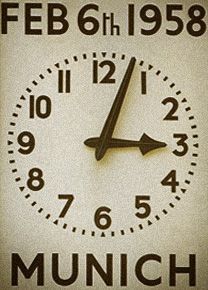
Munich
An event that shaped a club’s legacy. 

The legacy of Munich is not just the tragedy. It is the entire club itself.

Never forget.

Thanks for reading, and sorry for the delay. Been caught up with college. I’ll be back with more.

Sarma out.
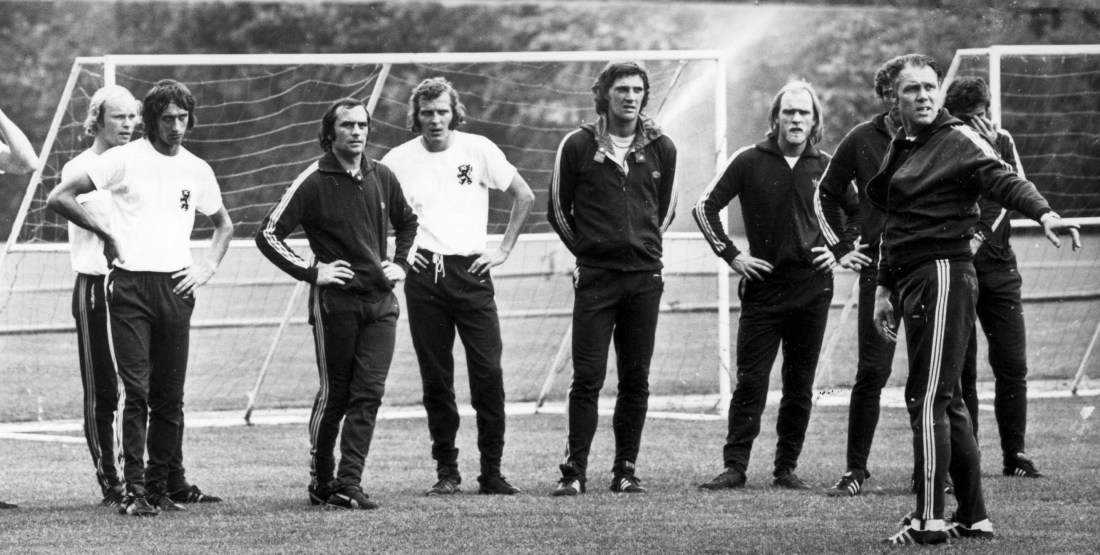
Total Football – Football made into an Art Form.

So far, I’ve been putting out pieces about matters related to what’s happening in the football world at that particular point of time. So why not take a step back? Why don’t we take a look at people/events that shaped the Beautiful Game into what it is today?

Ever since the inception of the Beautiful Game, and the evolution of football tactics, dating back to the late 19th century, the game has slowly evolved. As the decades go by, football has slowly turned into a battle of wits, as much as physicality and skill. As the years go by, players and managers alike engineer new methods in order to gain the upper advantage over their opponents. A culmination of all those ideas executed by those pioneers of football result in the metaphorical poetry in motion we view in the digital age.

Before we go any further, let me state that there is no perfect formation in football. The sport is still evolving, despite the notion that the game has reached a state of perfection. Throughout the decades, there have been many events/people/methods that have changed the game. Take legendary Arsenal manager Herbert Chapman’s WM formation in the 1930s, which he executed in order to adapt more to the offside rule. Italy’s Catenaccio, which adhered to their defensive style, which put an extra sweeper behind the back four, as a sort of insurance policy to keep players out, while the back four had man-marking duties. Or Hungary’s positioning, which revolutionized modern football, allowing attackers to run into space instead of directly at their opponents.

Being a Manchester United supporter, I obviously prefer all-out, full fledged counter-attacking football. But then again, which of us in the modern era doesn’t? I absolutely love passing. If you ask me, I’d rather pass the ball to my teammate running in behind, or run opponents around in circles with a flurry of one touch passes instead of trying to beat my man by running at him and hoping for the best. Which brings me to the topic at hand. If you ask me, the one tactic that embodies the spirit of the Beautiful Game in the 21st century, is none other than the style perfected by Rinus Michels, known as Total Football. This will forever be a gilded term in the football lexicon.

rinus
Rinus Michels’ Netherlands team essentially laid the foundations of football as we know it today.

The reason I say ‘perfected’ instead of ‘created’ is because this style of football existed, albeit in patches, before Michels unleashed his football revolution at Ajax Amsterdam in the 1960s and 1970s. But it wasn’t perfected. Rinus Michels viewed football in his own way. If you gave it a word, it’d be Maakbarheid – the ability and willingness to shape, mould, and control an entire physical environment and all that occurs within that environment. This required a strong, determined mentality and intelligent application. Granted, football was not as primitive as you might think during that time. Full backs overlapping wingers and strikers dropping back to collect the ball – these existed even before Michels introduced himself as a force to be reckoned with.

Before Michels, there had been exploits and moments of beautiful, intelligent football played out, examples of which I’ve already stated. But Michels was different. For his style of play to work, he needed space. Total oscillation. David Winner, in his excellently written book, Brilliant Orange: The Neurotic Genius of Dutch Soccer, touches on this very notion:

“Total Football was, among other things, a conceptual revolution based on the idea that the size of any football field was flexible and could be altered by a team playing on it. In possession, Ajax – and later the Dutch national team – aimed to make the pitch as large as possible, spreading play to the wings and seeing every run and movement as a way to increase and exploit the available space. When they lost the ball, the same thinking and techniques were used to destroy the space of their opponents.”

Michels, himself a former Ajax player, received a similar education under the guidance of British managers Jack Reynolds and Vic Buckingham, which helped instill the nature of Dutch football, which would later help create a style that would change the game forever.

From his appointment as Ajax manager in 1965, he began to reshape the club’s philosophy into his own, that would later branch out all across the world. Total Football required technically sound players to constantly be on the move, keeping possession, passing the ball around, occupying spaces left by teammates. Michels’ Ajax, Barcelona and Netherlands teams all followed this system. This made it extremely difficult for the opposition players to keep track of a player. Footballers were expected to be capable of playing in defence, midfield and attack, creating an incredibly universal side. Every player, goalkeeper included, was involved in the buildup of an attack, interchanging positions constantly, which dragged opponents out of shape, allowing them to move forward, applying more pressure. It was beautiful. Ruthless. Swift. Intelligent. Groundbreaking. It was poetry in motion.

This was where the concept of a ‘False 9’ was created, unlike people’s perceptions that it originated during Pep Guardiola’s tenure at Barcelona. A False 9 is a roaming forward who has the freedom to move anywhere on the pitch in order to initiate attacks and break opposition defences. Pep Guardiola allotted this position to the superhuman Lionel Messi, which yielded scintillating results.

The football Michels required from his players was of the intelligent, positive, attacking variety. His teams at Ajax, Barcelona and most notably, the Netherlands national team (the Oranje) were able to showcase a machine-like efficiency as a unit, while at the same time bring out the individual brilliance of each player. Michels turned football into an art form, and his players, Johan Neeskens, Johan Cruyff, Pat Keizer; and later under Cruyff, Ronald Koeman, Ruud Gullit, Marco van Basten, Frank Rijkaard and Jan Wouters were handed the paintbrushes. Here’s an example of Total Football, showcased brilliantly by Netherlands in 1988.

Out of all the teams Michels managed, it was the Oranje team of 1974 that showed us the true nature of Total Football. They effectively brought an end to the Brazilian juggernaut by beating them 2-0 at the 1974 World Cup, in humiliating fashion.

Perhaps the one player in all of Rinus Michels’ teams that embodied everything stated out in his philosophy was Johan Cruyff. One of the greatest players to ever kick a ball, and possibly the most influential person the sport has ever had. With him as a deep-lying forward, he would create chances for his teammates, get into space, or just dazzle us with some impossible piece of skill.

1f2258f831b26ef54f1117342c91afd9
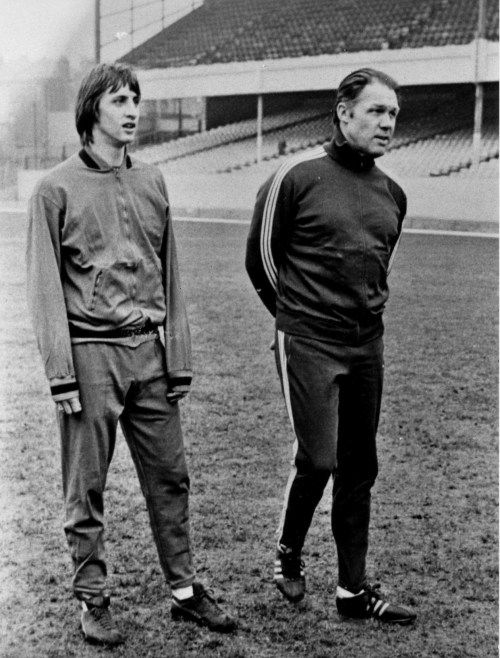
Two pioneers of football.

Cruyff continued Michels’ philosophy (with his own tiny modifications), passed it on to younger generations of Ajax players, creating football juggernauts like RuudGullit, Frank Rijkaard and Marco van Basten. He later passed it on to FC Barcelona, effectively making their philosophy his own, and in extension, Michels’. Using Total Football, he created his Dream Team in the early 1990s, comprising of players like Romario, Michael Laudrup, HristoStoichkov, Ronald Koeman, Pep Guardiola and so on. Johan Cruyff is also credited with the idea of La Masia, which we know today as Barcelona’s youth setup, which has produced players like CarlesPuyol, Gerard Pique, CescFabregas, Sergio Busquets, Xavi, Andres Iniesta, and most notably, Lionel Messi.

Even today, Barcelona follows the philosophy introduced to them by Johan Cruyff, whose protegé, Pep Guardiola passed it on to his Barcelona team of 2009 and the early 2010s, the style we call Tiki Taka, forming possibly the greatest football team of all time. Pep now manages Manchester City, where he still employs his mentor’s methods, which seem to never fail to destroy the opposition, which is the stuff that feeds our football obsession through a slow IV drip into our collective bloodstream, no matter which team we support.

hqdefault
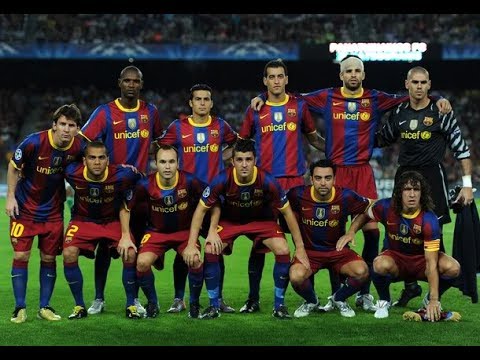
Pep Guardiola’s unstoppable Barcelona side.


Total Football is still alive in its many forms, and has brought a considerable amount of success for the teams which employ them. The ideas put forth by Rinus Michels, Johan Cruyff and their respective protegés will never be forgotten, as they continue to smite us. By doing away with the idea of ‘fixed’ positions and rigid formations, football found new identity. The gelatinous formations and the fluid style of football gave way to a game of constant movement and circulation. A game of space. And that, my friends, is Total Football.

Thank you for reading. I’ll be back with more content.


Sarma out.

Top 10 Champions League matches this century – 5 to 1.

Sorry I took so long to put up the completed list. If you haven’t caught my 10-6 list, check it out here!

Where were we? Yes, let’s get to the top 5!

5. Manchester United vs. Real Madrid | 2002-03 Quarterfinal, Second Leg.

April 23, 2003 | Old Trafford, Manchester

Manchester United 4 – 3 Real Madrid

Ronaldo
You have to be a truly special player to get a standing ovation at the Theatre of Dreams.


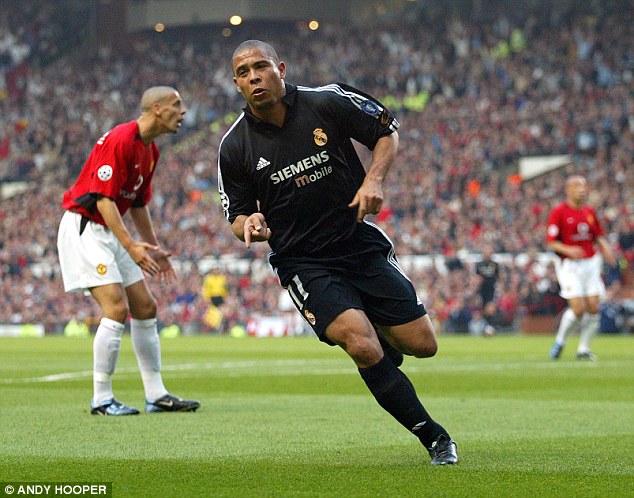
For the home side (in this instance, of all teams, Manchester United) to give a standing ovation for the player on the opposition, you have to do something truly special. Ronaldo’s hat trick that decimated Manchester United will forever be remembered as one of the all-time great European performances.

The match itself was an incredible display of attacking football by two world class teams. And on that pitch, filled with some of the greatest players to ever play the game, Ronaldo Fenomeno shined the brightest. As he was hooked in by Vincent del Bosque midway through the second half after *that* screamer to complete the treble, the Old Trafford faithful saw it fit to give probably the greatest striker in the game a fitting sendoff.

Ruud van Nistelrooy had cancelled out Ronaldo’s first goal, and an own goal from Ivan Helguera saw the scores level in the 52nd minute. However Ronaldo’s stunning third killed off the match despite David Beckham’s late brace which included a trademark free-kick. Beckham tapped in another with five minutes left on the clock, but despite the 4-3 scoreline, the aggregate was 5-6 in Madrid’s favour, which saw United crash out after a heroic battle.

A shame too, as the final that year would be played at the Theatre of Dreams.


4. Barcelona vs. Chelsea | 2011-12 Semifinal, Second Leg.

April 24, 2012 | Camp Nou, Barcelona

Barcelona 2 – 2 Chelsea


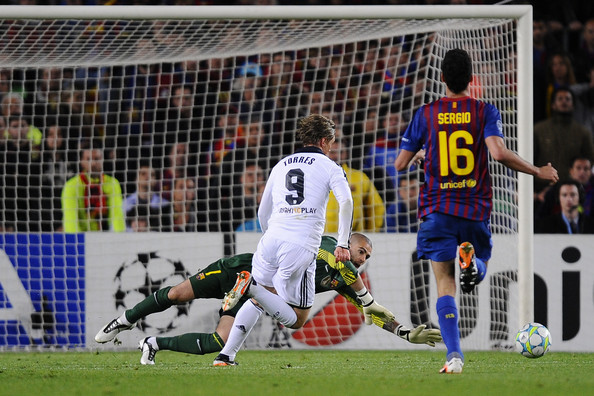
Fernando+Torres+FC+Barcelona+v+Chelsea+FC+R-WXhQ9uaUpl
Fernando Torres silences Camp Nou.


The game remembered for Fernando Torres’ last minute goal which silenced the Camp Nou, and resulted in Gary Neville’s unforgettable goalgasm (which will never get out of your head once you witness the goal). Chelsea heroically held Barcelona 1-0 at Stamford Bridge, but no one was convinced they’d keep up the momentum at the famous Camp Nou stadium. Well, except the Chelsea players, of course.

Andres Iniesta had just waltzed through Chelsea’s crumbling defence and slotted home to leave Roberto Di Matteo’s side two goals down and without their captain John Terry, who was sent off for kneeing Alexis Sanchez in the back. Now the only question was not whether Barcelona could win, but how many they’d score.

But Chelsea were on top on away goals via Ramires’ perfect chip over Victor Valdes into the net. Minutes after the second half started, Didier Drogba fouled Cesc Fabregas in the box, which resulted in a penalty for the Catalans. Leo Messi stepped up to take it. Misses. Unfortunate, but with his track record, not that surprising, despite the Argentine having the best season of his life at that period of time.

The rest of the half was Barcelona throwing everything they had at Chelsea’s back line, but the Londoners refused to buckle under pressure.

And then, in the first minute of injury time, at the height of the pressure, Ashley Cole cleared the ball up-field, which was brilliantly controlled by Fernando Torres, who subsequently waltzed past Victor Valdes and slotted the ball into the empty net as the Nou Camp watched in horror. Cue celebrations. Cue Gary Neville orgasm sounds.

Chelsea went on to win the final in Munich.


3. Deportivo la Coruna vs. AC Milan | 2003-04 Quarterfinal, Second Leg.

April 7, 2004 | Estadio Riazor, A Coruna

Deportivo 4 – 0 Milan

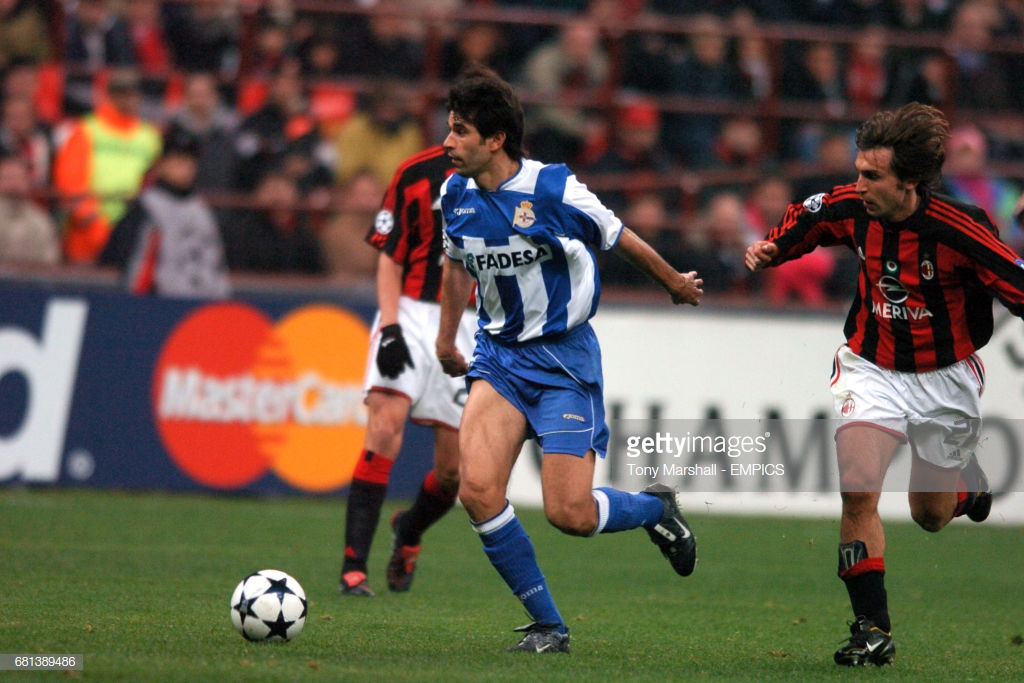
Soccer - UEFA Champions League - Quarter Final - First Leg - AC Milan v Deportivo La Coruna
Deportivo’s Juan Valeron getting away from Andrea Pirlo.


Before the 6-1 comeback by Barcelona against PSG, there was Deportivo la Coruna’s 4-0 comeback to trump Carlo Ancelotti’s legendary AC Milan side. One of the greatest comebacks as well as one of the greatest upsets in Champions League history. Milan had thumped Deportivo 4-1 in the first leg at the San Siro with goals from veritable footballing legends Kaka, Andriy Shevchenko and Andrea Pirlo.

Deportivo fans travelled to Estadio Riazor with no hope at all. The second leg seemed to be a mere formality. An early goal from Deportivo’s Walter Pandiani raised the home fans’ hopes.

Juan Carlos Valeron turned in a second in the 35th minute. It was turning out to be Mission Impossible now. Albert Luque scored a third due to a mistake made by legendary defender Alessandro Nesta. They were now in the lead on away goals. Tensions were on a high, but Fran’s fourth for the home side sent Deportivo la Coruna into the semifinals and it’s fans into delirium.

A lot of today’s football fans may not know about this game, but I saw it fit to include it as my third, as it is my opinion that this match deserves more recognition.


2. Barcelona vs. PSG | 2016-17 Round of 16, Second Leg.

March 8, 2017 | Camp Nou, Barcelona

Barcelona 6 – 1 PSG

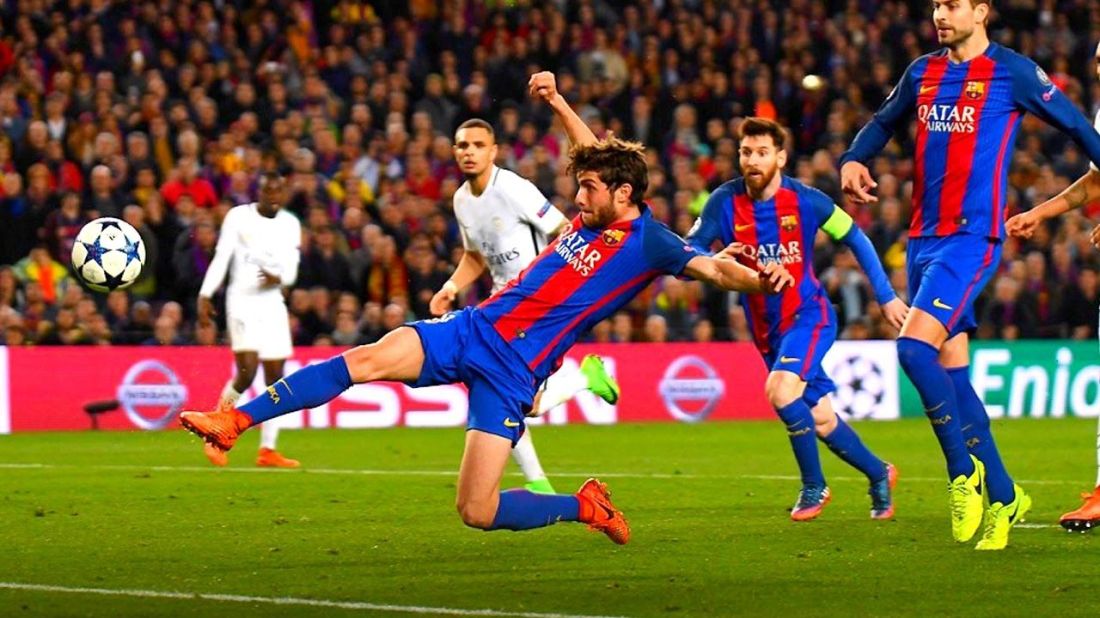
Sergi
The goal that completed the seemingly impossible comeback.


I still remember Edinson Cavani’s celebration after scoring the goal which put PSG still well into the lead and Barca needing three goals to beat them. It was as if they had already won it.

The Uruguay frontman drove home a half-volley in the 62nd minute. He had stopped any hope of a Barcelona comeback and sent PSG into the quarterfinals, cementing their place as one of Europe’s top sides.

Except he hadn’t.

Up till that point, goals from Luis Suarez and own goal from Layvin Kurzawa and a Lionel Messi penalty saw the host 3-0. They were 3-1 after Cavani’s intervention. The Catalans refused to give up. They needed 3 goals to win the match. It was well into the 80s with less than two minutes left for 90 minutes to be completed.

Neymar delivered an inch perfect free kick into the top right corner. Injury time. 5 minutes. 2 goals to win. Luis Suarez felt a challenge and collapsed like a sack of potatoes, earning a penalty. Neymar slotted it in. 5-5. There was hope that the impossible would happen.

Last minute of the game. The unstoppable Neymar chips a cross into the PSG penalty area. La Masia product Sergi Roberto gets in behind and flings himself at the ball, and gets it past Kevin Trapp into the net.

Hysteria. Fans piling themselves on top of each other, failing to control their tears. Coaches running on to the field. A contrast of emotions. PSG and Unai Emery holding their heads in shame and disappointed. Barcelona and Luis Enrique running the length of the field, hugging as many people as possible.

An historic comeback.

1. Liverpool vs. AC Milan | 2004-05 Final.

May 25, 2005 | Ataturk Olympic Stadium, Istanbul

Liverpool 3 – 3 AC Milan (Liverpool 3-2 on penalties)

gerrardgoal
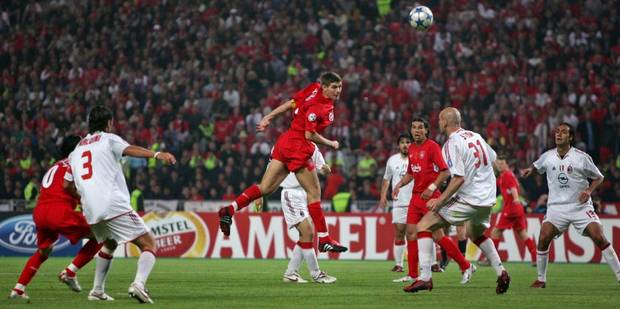
Captain Fantastic.


That night in Istanbul.

No team has been completely outclassed and completely outclassed the opposition in the same match like Liverpool had that night. Possibly the greatest European night in their long and storied history.

The best defender in the world Dejan Lovren, and his heroics against Dortmund *just* missed out on that title.

Milan captain Paulo Maldini gave the Rossoneri an early lead, before Hernan Crespo’s first half brace put the scoreline at 3-0 to Milan.

His second goal, a classy chip over Jerzy Dudek solidified the feeling that Milan were a class above the English side.

Milan continued their dominance over Liverpool after the interval, as Dudek managed to deny Andriy Shevchenko. And not for the last time. Liverpool were devoid of hope.

Until Steven Gerrard headed in John Arne Riise’s cross. Liverpool sparked to life, regaining their confidence. Just two minutes later, Vladimir Smicer, in his last game for Liverpool, drove home a shot from 20 yards. 3-2. They were now unstoppable. Milan were desperately trying to contain them.

Gennaro Gatusso fouled Steven Gerrard in the box, and a penalty was awarded. Xabi Alonso was tasked with the chance for his team to draw level.

The penalty was saved by Dida, but Alonso sent the rebound crashing into the net. 3-3. No one had seen this coming. Liverpool held on, defending heroically against Milan’s array of football heavyweights. Dida made a number of wonder saves, especially during extra time. Extra time ends. 3-3.

The game went to penalty shootouts. Dudek proved the hero one final time, saving from Shevchenko (again). Champions League number 5 for Liverpool. Manic celebrations from the Reds.

And thus ended the greatest Champions League match ever played.


Thanks for reading. Apologies for the delay in uploading. I’ll be back with more content.

Sarma out.

Champions League Football is back! Top 10 Champions League matches this century – 10 to 6.

At the time of writing, it is a little over 24 hours left for the first couple matches of this season’s UEFA Champions League to kick off. The biggest competition in club football history. The competition to see which club can finally beat Real Madrid in the finals (I kid, of course). Initially named the European Champion Clubs’ Cup, or simply the European Cup, this famed competition has seen a plethora of football teams lift the trophy. But ever since it’s inception, no club has gone close to surpassing the team which won the first edition in 1955-’56, who coincidentally also happen to be the reigning Champions, Real Madrid. Los Blancos won their 13th title (their third consecutive win) after *another* display of fantastic football from Zinedine Zidane’s boys. But now that Zizou’s packed his bags, and their golden boy, Cristiano Ronaldo left for Italy, it is doubtful that they’ll be making that number 14 this season. But hey, that’s just me.

Over the decades, we have seen countless matches, moments and goals that’ll forever remain etched in the minds and hearts of football matches everywhere. Who can forget Zinedine Zidane’s volley in the 2002 Champions League final? Or Manchester United’s incredible comeback in the 1999 final to snatch the title away from Bayern Munich? Steven Gerrard’s (typical) stunner against Olympiakos in the 2004-’05 season. John Terry’s slip in the 2008 final during shootouts (United fans, where y’all at?!). Only a handful of moments.

Now what I’m gonna do is put together a list. A list of what I think are the 10 best Champions League matches played in the 21st century. For those of you who still think 20 years ago means 1990, take a reality check. It’s almost 2020 now (yikes).  I might have missed out on a couple according to some, so please forgive me if I have, because there have been PLENTY of matches to choose from. Since there’s gonna be a LOT to read, and I’m pretty sure you lot might not read the whole thing, I’m going to split the list between two posts. This article will reveal my 10-6 greatest matches this century.

So let’s get to it.

10. Real Madrid vs. Atletico Madrid | 2013-’14 Final.

May 24, 2014 | Estadio da Luz, Lisbon

Real Madrid 4 – 1 Atletico Madrid

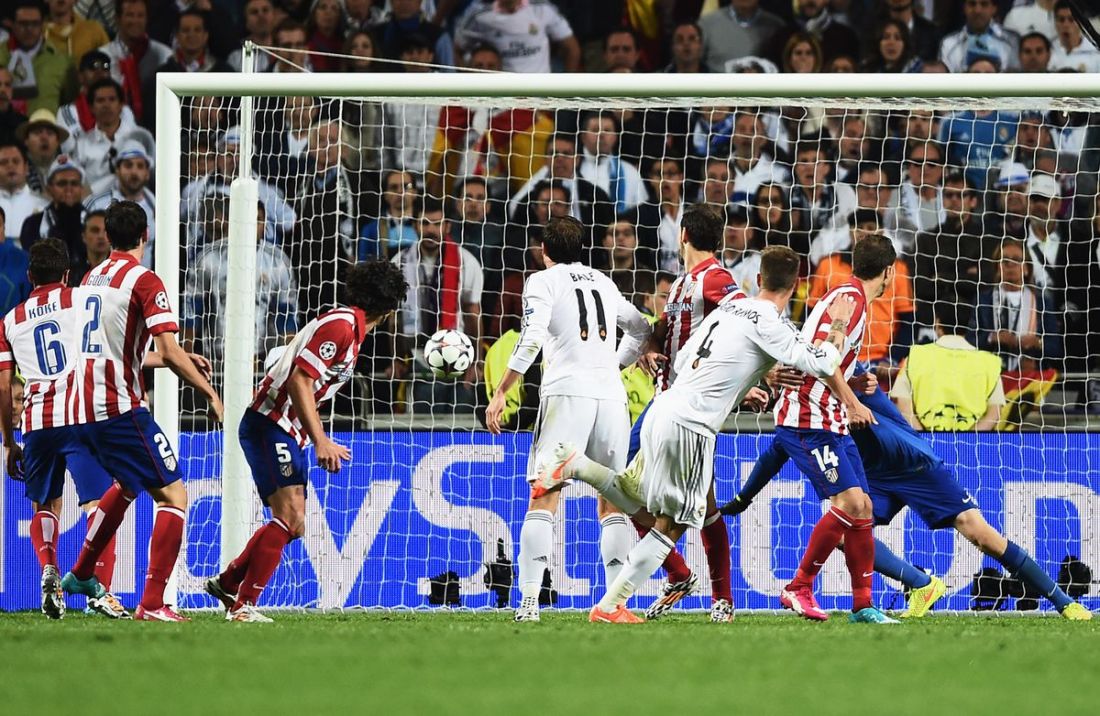
Sergio Ramos
Sergio Ramos with the header from the set piece. What else is new?

Do not let this scoreline give you any idea about how this match was played out. Diego’s Simeone’s Atletico Madrid, who were chasing the double after winning the La Liga, were absolutely heroic in defence, and were a unit for almost the whole match. After taking the lead in the 36th minute through Diego Godin, Atletico were able to repel the best efforts of Cristiano Ronaldo, Gareth Bale, Karim Benzema and Angel di Maria for the remainder of the 90 minutes. That is, until a certain Sergio Ramos popped up with one of his trademark headers to equal the scores during injury time. But even till the first half of extra time, the score remained level. But the last 15 minutes of the match was open season on Atletico, with Bale, Marcelo and Ronaldo (try keeping him out of the scoresheet) finding the net, resulting in Real Madrid’s coveted La Decima – their 10th European Cup. A hard fought, but deserved victory.

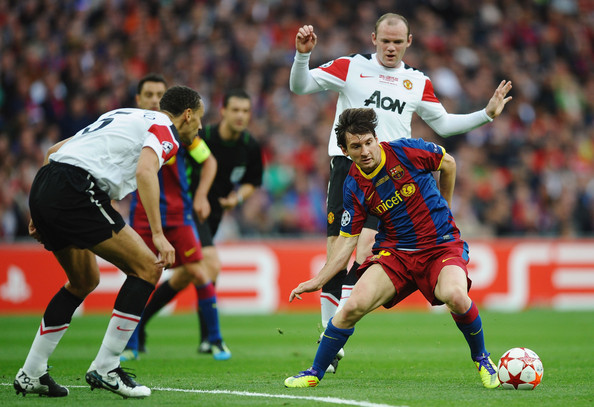
9. FC Barcelona vs. Manchester United | 2010-’11 Final.

May 28, 2011 | Wembley Stadium, London

Barcelona 3 – 1 Manchester United

Messi
A master at work.


When Sir Alex Ferguson, a manager who has literally seen it all, done it all and won it ALL calls this Barcelona team the greatest team he ever faced, you’d have to imagine what they had to do in order for Sir Alex to hold them in such high regard. There is no other way to say this, painful though it is for me, Pep Guardiola’s men wiped the floor with United. An absolute masterclass. Tiki-taka football at it’s finest. Leo Messi, Xavi Hernandez and Andres Iniesta at the height of their powers. This team ran circles around United, with players like Wayne Rooney, Javier Hernandez, Ryan Giggs, Rio Ferdinand, Nemenja Vidic and Edwin van der Saar playing for the club.

Messi was at his otherworldly best up front along with Pedro and David Villa, while the midfield trio of Xavi, Iniesta and Sergio Busquets with their intricate passing, movement and possession gave United none of the ball. Pedro’s finish put the Catalan club in front, but it was cancelled out by Wayne Rooney’s brilliant finish after a excellent move by the Red Devils. But that only forced Pep’s team to shift the team up several gears, and they were untouchable. Messi surged forward, regained the lead for Barcelona, and David Villa’s curler from outside the box gave Barcelona the title. I don’t think you’ll be seeing any of Pep’s future teams play like this ever again.


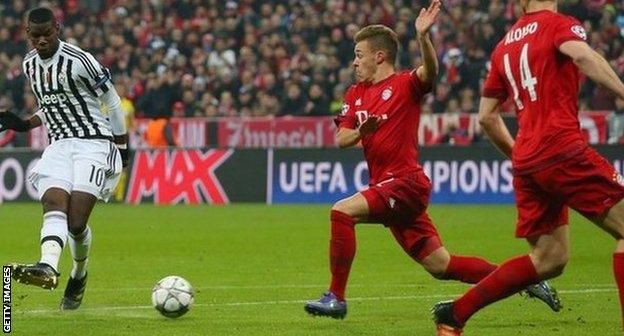
8. Bayern  Munich vs. Juventus | 2015-’16 Round of 16, Second Leg.

March 16, 2016 | Allianz Arena, Munich

Bayern Munich 4 – 2 Juventus

Pogba
Peak Paul Pogba.


The Allianz Arena was prepared for a thriller, after a wild 2-2 draw in Turin in the first leg. Paul Pogba gave Juventus the first goal, while an excellent counter attack orchestrated by Juventus’ Alvaro Morata was finished off brilliantly by Juan Cuadrado. After over 70 minutes, all seemed lost for the Bavarians. Robert Lewandowski cut the deficit by one in the 73rd minute. Juve held on till the death, which was when Thomas Muller added in a second to send the match to extra time.

Goals from Thiago and Kingsley Coman (on loan from Juventus) in the second period of extra time sent Coman’s parent club crashing out, and the Germans through to the quarter finals. A banger of a match.


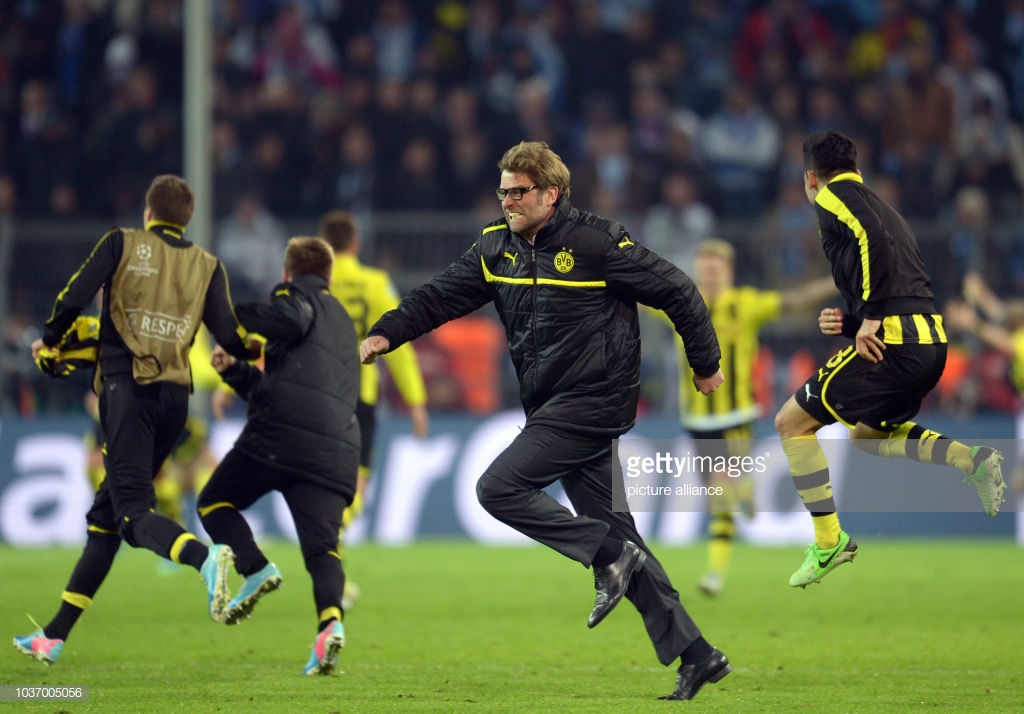
7. Borussia Dortmund vs Malaga |      2012-’13 Quarterfinal, Second Leg.

April 9, 2013 | Signal Iduna Park, Dortmund

Borussia Dortmund 3 – 2 Malaga

Borussia Dortmund - FC Malaga
die Schwarzgelben in hysterics.


Malaga were on track to become the story of the 2012-’13 UEFA Champions’ League. That story was sadly cut short by Jurgen Klopp’s Borussia Dortmund. Managed by Manuel Pellegrini, this Malaga team, spearheaded by a young winger by the name of Isco (heard that name somewhere, haven’t you?), Malaga had already shocked the world by reaching the quarterfinals in their first ever campaign. The first leg saw a 0-0 draw in Spain. Now Malaga had to face Borussia Dortmund in Signal Idunal Park in front of their famed Yellow Wall. Not only did they brave that, they excelled for most of the match.

Joaquin gave Malaga a shock lead in the 25th minute, but Robert Lewandowski restored parity just before half time. In the 82nd minute, it was Portuguese winger Eliseu who had almost certainly booked the Spanish club’s place in the semis. Nothing short of two goals would reverse the tie for Dortmund, and the first didn’t even arrive until the first minute of stoppage time.

That goal was scored by Marco Reus. Malaga tried to hold on, but tragically lost as Dortmund, through Felipe Santana snatched victory from the jaws of defeat.

Malaga’s main man, Isco, left for Real Madrid the following summer. He has won 4 Champions Leagues till date.

Malaga haven’t returned to the Champions’ League since that heartbreaking defeat.


6. Chelsea vs. Liverpool | 2008-’09 Quarterfinal, Second Leg.

April 14, 2009 | Stamford Bridge, London

Chelsea 4 – 4 Liverpool

Lampard
Super Frankie Lampard.


There’s only one expression you can think of when you see this scoreline. Goal fest. Chelsea had virtually put this draw to bed when they won 3-1 at Anfield in the first leg. But a Fabio Aurelio free kick and a Xabi Alonso penalty brought the Reds level by half time. Chelsea turned on the style with Didier Drogba goal from an almost impossible angle. This was followed by a bullet of a free kick from Alex five minutes later. Frank Lampard added a third, making the score 3-2 in Chelsea’s favour. Lucas and Dirk Kuyt tried to lead a fightback by adding two more goals for the Reds, but Lampard’s late strike made the aggregate 7-5, ending any chances of a Liverpool win. A match for the ages.


Got this far? Good. I’ll be putting out my top 5 very soon. Thanks for reading, and stay tuned for the rest of this article.


Sarma out. For now.

The Best FIFA Football Awards 2018 – My Take.


fifa-the-best-awards-690x460


The upcoming The Best FIFA Football Awards ceremony, held on 24th September, 2018 in London, England, is the most anticipated footballing event taking place in the near future (with the exception of the return of Champions League football, of course), which is also why I thought it’d be a nice topic for my  next article. This year’s edition is even more so, because it is probably the first time the award might be given to a player other than Lionel Messi and Cristiano Ronaldo. Now don’t get me wrong, these two footballing heavyweights have rightfully cemented their place as two of the greatest players to ever kick a ball. They have done things at such a frequency and consistency that footballers can’t even dream of. It is very unlikely that we’ll be seeing players of their like, at least during our lifetime. Messi and Ronaldo have been dominating the footballing world for more than a decade. Every football award handed out is contested between these two, with no one else even considered in the picture.

But this year might actually be the year where they might be knocked off their respective thrones. This year, we could be seeing Luka Modric holding up the coveted prize instead of them. And rightfully so. But I’ll get to that later.

Now, What Exactly are These Awards?


The Best FIFA Football Awards are presented by the governing body (FIFA, in case the title didn’t give you the hint), and have been since 2016, which attempts at reviving the old FIFA World Player of the Year, which was merged with the Ballon D’Or 2010, and subsequently split in 2015. We see the football world’s best and brightest getting the recognition they deserve (well, most of them anyway). The FIFA Best Awards are split into nine categories, including: Best Men’s Player, Best Goalkeeper, Best Men’s Coach, Best Women’s Player, Best Women’s Coach, the FIFA Fair Play Award, FIFA Puskas Award, FIFA Fan Award and the FIFA FIFPro World 11. 25% of the final votes for these awards come from the fans, while the remaining 75% will be distributed evenly between the national coaches of FIFA Member Associations, their team captains and a select group of football journalists from those countries.

The selection panel to shortlist the initial Best Men’s Player and Best Men’s Coach awards include a host of former footballing greats such as Frank Lampard, Didier Drogba, Kaka, Fabio Capello and Ronaldo Nazario.


Who are the nominees?

Since there are a lot of awards and now that the final lists have been updated by FIFA, I’ll be speaking mainly about Best Men’s Player, Best Goalkeeper, Men’s Best Coach, the FIFA FIFPro World 11.

The Men’s Best Player Award this year sees former Real Madrid and current Juventus forward Cristiano Ronaldo, Real Madrid’s midfield maestro Luka Modric, and Liverpool’s talisman Mohammed Salah take the top three spots. This is also the first time in a decade that Lionel Messi hasn’t made the final three. To quote Bob Dylan, ‘The times, they are a-changin’.’

The FIFA Best Goalkeeper list comprises of Belgian shotstopper and World Cup Golden Glove winner Thibaut Courtois, who recently made the switch from Chelsea to Real Madrid, France captain Hugo Lloris, and Leicester City’s Great Dane, Kasper Schmeichel.

Men’s Best Coach comprises of Croatia’s Zlatko Dalic, who led his nation to the final of the 2018 World Cup, Croatia’s best ever World Cup finish. His counterpart in that final, World Cup winning coach Didier Deschamps, who also captained France to the trophy in 1998, and his former French teammate, the legendary Zinedine Zidane, who led Real Madrid to their third successive UEFA Champions League complete the final three.

Not bad, eh?


Here’s who I think should win.


I’ll say this. There are plenty of players/coaches who deserve these Award(s) as much as the nominees. Especially the players. People like Sergio Busquets, Daniele de Rossi, Gianluigi Buffon, Giorgio Chiellini and the like are not appreciated enough for what they give for their respective teams. They do not require awards to prove that they’re the best at what they do. But let’s move on to the predictions.


Men’s Best Player – Luka Modric.

Lukita, as he is so affectionately called by his teammates, has had probably the best season in his long and trophy-laden career. He has been an immense presence in midfield for both club and country. I mean, he was everywhere, doing every job a midfielder had to do. He made the tackles, he started the counter attacks, he made the crucial pass, he assisted the goals, and scored the occasional banger. Cristiano Ronaldo, who is keen to bag the award for a third consecutive time, has some serious competition this year, and this time, it’s not Leo Messi. The romantic in me desperately hopes Modric is the one who gets to stand on that podium.

Best Goalkeeper – Thibaut Courtois.

After his heroics in Russia during the World Cup, his consistent performances for Chelsea, and with him getting the Golden Glove, Thibaut Courtois seems to be a shoe-in for Best Goalkeeper. If Hugo Lloris wasn’t so cocky in the World Cup finals, he might have even had a chance at winning.

Men’s Best Coach – Didier Deschamps.

After getting so close to winning the Euros in 2016, but letting the opportunity slip, France and Didier Deschamps were determined not to let Football’s Biggest Prize slip from their grasp. And that’s exactly what they did. They were patient, they were careful, and they were devastating. Deschamps became only the third person to win the World Cup as a player and a manager, after Mario Zagallo and Franz Beckenbauer. Not bad company to be in.

My FIFPro World 11 for 2018.

Now we get to the good part. This team isn’t chosen by the fans, to clarify. 25000 professional footballers from 65 countries voted for their team of the year, out of which a list of 55 players with the most votes was compiled. The World 11 will be announced during the ceremony on 24th September. But that’s not going to stop the rest of us predicting who’ll get in and who won’t, will it? The formation is a classic 4-3-3 (4 defenders, 3 midfielders and 3 forwards), and the nominees will be allotted based on their respective positions.

So let’s get to it.

Goalkeeper – Thibaut Courtois. This is what’s likely to happen, but the United fan in me hopes that David de Gea somehow steals that spot. After all, he’s been immense for the Red Devils and is regarded as the best goalkeeper in the world (unofficially).

Right Back – Dani Carvajal. Consistent throughout the season. Unlucky to miss the trip to Russia. Not that it mattered anyway.

Right Centre Back – Raphael Varane. World Cup winner. Champions League winner. Pops up with the occasional header. Rock at the back.

Left Centre Back – Sergio Ramos. Real Madrid’s capitan, leader and legend. Led Madrid to their third successive Champions League.

Left Back – Marcelo. Best left back in the world right now according to me. Best left back since Roberto Carlos. Is there any doubt?

Centre Defensive Midfielder – N’Golo Kante. What a player. What a guy. Chelsea and France defenders can thank their lucky stars they have someone like him on their side. Tireless workhorse. Oh, and World Cup winner as well.

Right Central Midfielder – Luka Modric. Need I say more?

Left Central Midfielder – Kevin de Bruyne. Laser sharp passes. Unstoppable shots. Best midfielder in the world save for Modric. But that’s just my opinion.

Right Winger – Mohammed Salah. Broke all sorts of records last season. Scored goal after goal after goal. After goal. Like seriously, he just wouldn’t stop. Part of Liverpool’s fearsome attacking three along with Sadio Mane and Roberto Firmino. But there is a slight chance of Leo Messi beating him to this spot. After all, it is Leo Messi.

Left Winger – Cristiano Ronaldo. The legendary forward, who just completed a shock move after a decade with Los Blancos to the Old Lady, is a constant presence in FIFPro’s Team of the Year lists. No surprise there.

Striker – Harry Kane. Five season wonder. World Cup Golden Boot Winner. Don’t let Mo Salah scoring 32 goals in the league distract you from the fact that Kane scored just two less. One of Tottenham’s very own.


So that’s about it. Apologies if some of you felt it was a tad too long. This is my prediction for the FIFA Best Awards 2018. Let’s see if some of these predictions hold up. Thanks for reading. I’ll be back with more content. Oh, and again, and feel free to share this.


Sarma out.


Getting Started.

A bored 9 year old sat in front of the television after dinner. No good cartoon programmes were on, so he decided to channel surf. Decided to watch something different, so he switched to sports. He decided to watch some football (or soccer, if you will). Luckily, there happened to be a match being played live. Red shirts against white shirts, played out in a stadium that was largely dominated by a sea of supporters sporting the former colour.

The scoreline read: MUN 0-1 TOT. 30 minutes on the clock. But it wouldn’t stay the same for long. The white shirts scored again. 0-2.

There was no way the red guys are coming back from this, the boy thought. That’s where he’d be proven horribly wrong. He decided to watch the remainder of the match. By the time the first half ended, there was no doubt in his mind that the white shirts would be the victors. But then, something special happened.

The Reds surged forward, relentless in their pursuit of a goal to half the deficit. That opportunity came when a penalty was awarded to the Reds. The penalty taker was a lean, young man, who had a muscular frame. He converted from the spot. By this time, the young boy was getting a little more interested in the game’s proceedings. The Reds charged on, tearing apart the White shirts’ back line in the process. Again, ten minutes after the first goal, the Reds scored. The boy tried to catch the name of the scorer: ROONEY – 10. 

And again, a minute later, the lean, young man got the Reds a third by heading in a cross from Rooney. RONALDO – 7. 


The boy started to take a liking to this team wearing Red, comprising of Rooney, Ronaldo and Co. But he didn’t have time to stop and think further. The Reds were winning, but they showed no signs of stopping.

By the time the match was done, the scoreline read: MUN 5 – 2 TOT.

Manchester United. That was the name of this team that had torn the team in white to shreds. I took an instant liking to this team, and it’s #10, Rooney, in particular.


758px-Manchester_United_FC_crest.svg          The team crest looked nice to the boy as well, which served to increase his liking for this club.


This was how I was (properly) introduced to the sport of football. This was how this Obsession of mine for the Beautiful Game started.

The reason I started this blog was for one reason: to voice on my opinion on all matters football, about my team as well as rival clubs. I’m a 19 year old college kid from India, waiting to graduate with his Engineering degree, after which I’ll be choosing a field as far from Engineering as possible. I’ve seen my club, Manchester United in it’s heyday with the legendary Sir Alex Ferguson, the sudden crumble during the Moyes era, the frustrating van Gaal stint, and Jose’s Mourinho’s period of *slow* transition. Safe to say United is a club that’ll test your heart rate and send your emotions spiraling every which way, ranging from uncontrollable euphoria to inconsolable anguish. I guess that’s what makes us football fans so passionate about the sport. It brings out the good and bad sides of us. Clubs and countries battling it out for sport’s biggest prizes, while the whole world watches. Like Nokia, football also has it’s ways of Connecting People. But y’all football fans don’t need me to tell you this again.

As long as football goes on, us fan(atic)s will always be out there giving the team all kinds of stick, or defending the team as if our lives depend on it, or just let everyone know what we think about, plain and simple. So I’ll be putting out updates regularly; mainly European football (and Manchester United, obviously), but also a wide scope of other random topics ranging from Herbert Chapman’s Arsenal to Johann Cruyff’s legacy to Phil Jones’ hysterical faces.

So this was just an introduction. Hope you like what I publish, and feel free to share (*please*) my content with others.


Sarma out.